Product imagery / AI creative / Case study
One product.
Three distinct looks.
AI-assisted product photography for Busy Lil Beads, exploring how a single piece of jewelry can be presented in multiple settings while protecting the details that make it recognizable.
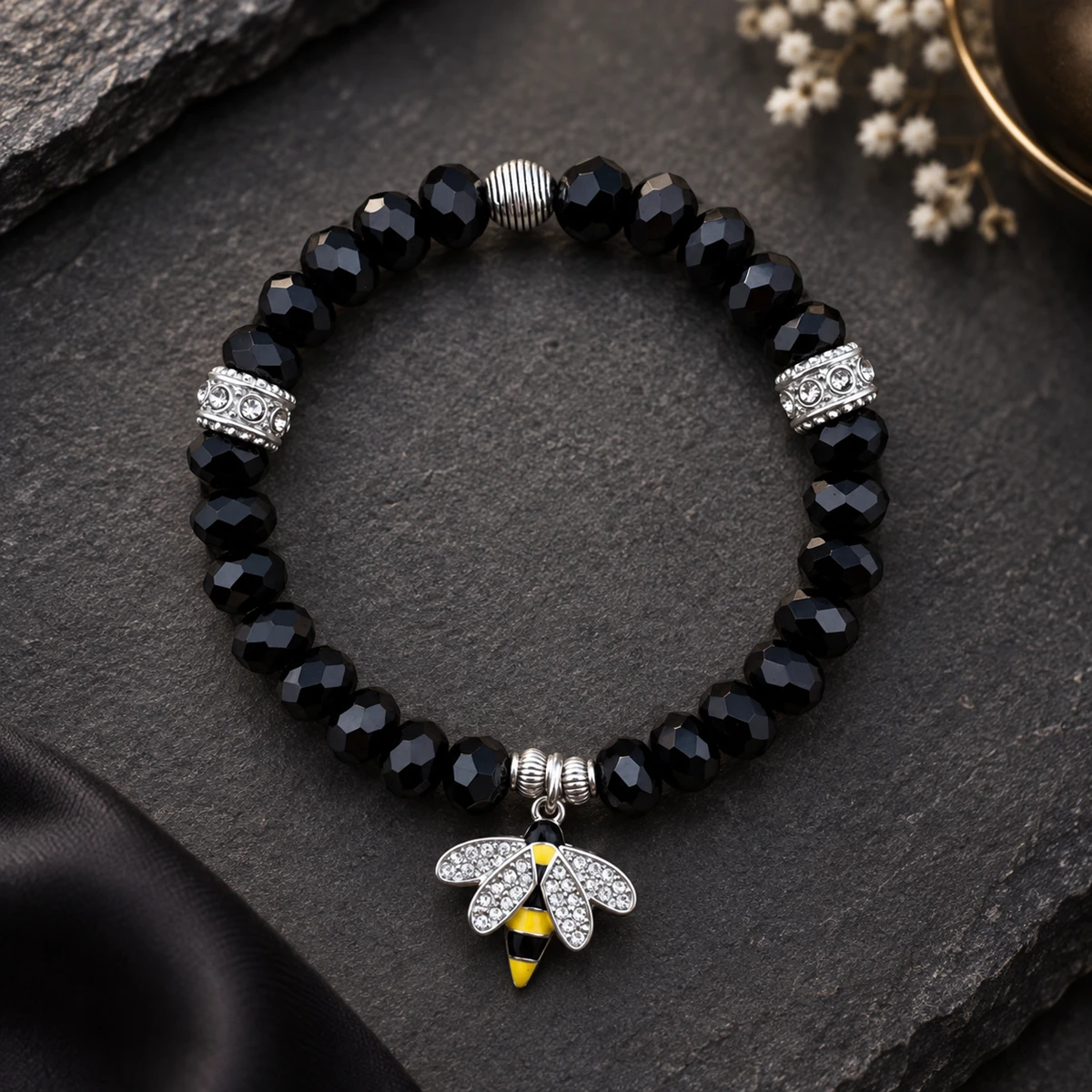
The brief
The product had to stay the hero.
The aim was to create polished boutique-style product scenes without organizing a separate physical photo setup for every look. The challenge: generative AI can change small product details as it changes the environment.
For this bracelet, bead placement, the silver spacers, and the yellow-and-black bee charm were key details to compare between results. One image still has a small bead inconsistency, so the set is a useful demonstration of both the potential and the QA required.
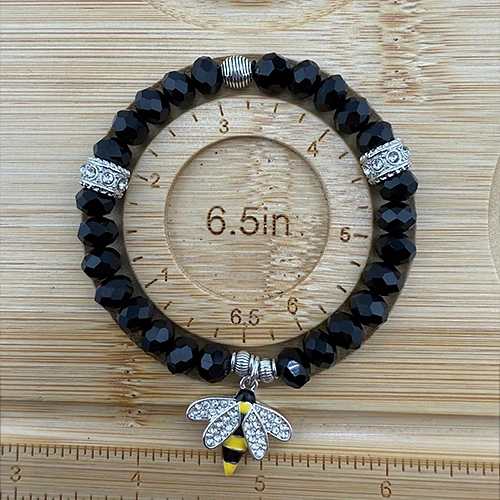
The actual bracelet served as the reference for bead arrangement, silver hardware, charm design, and product proportions across three AI-generated scenes.
The outputs
Three treatments. One recognizable design.
Different surfaces and lighting, with the same bracelet as the visual focal point.
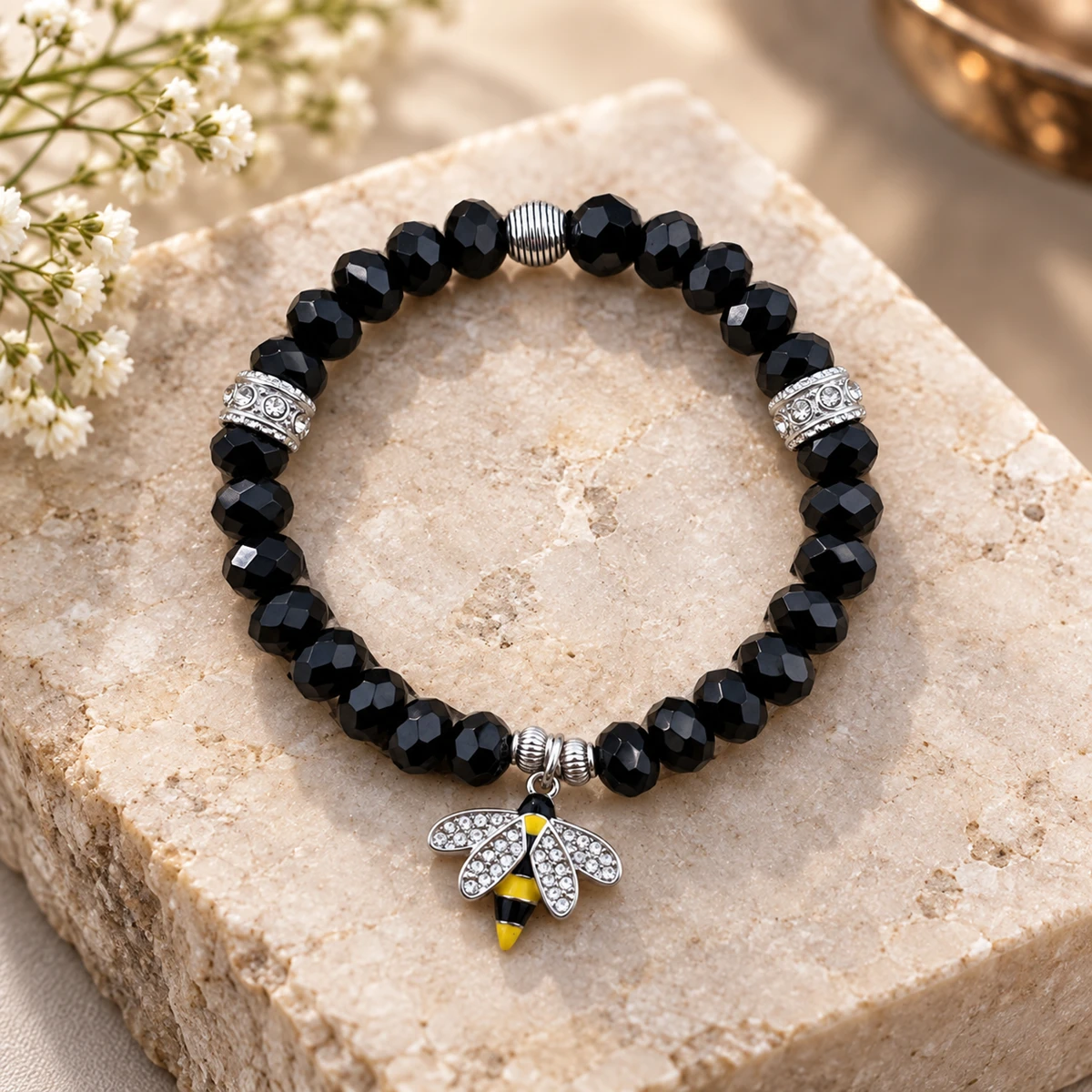
Warm stone
Soft natural light and warm neutrals for a boutique product listing.
Dark editorial
Contrasting materials and controlled highlights for a premium mood.
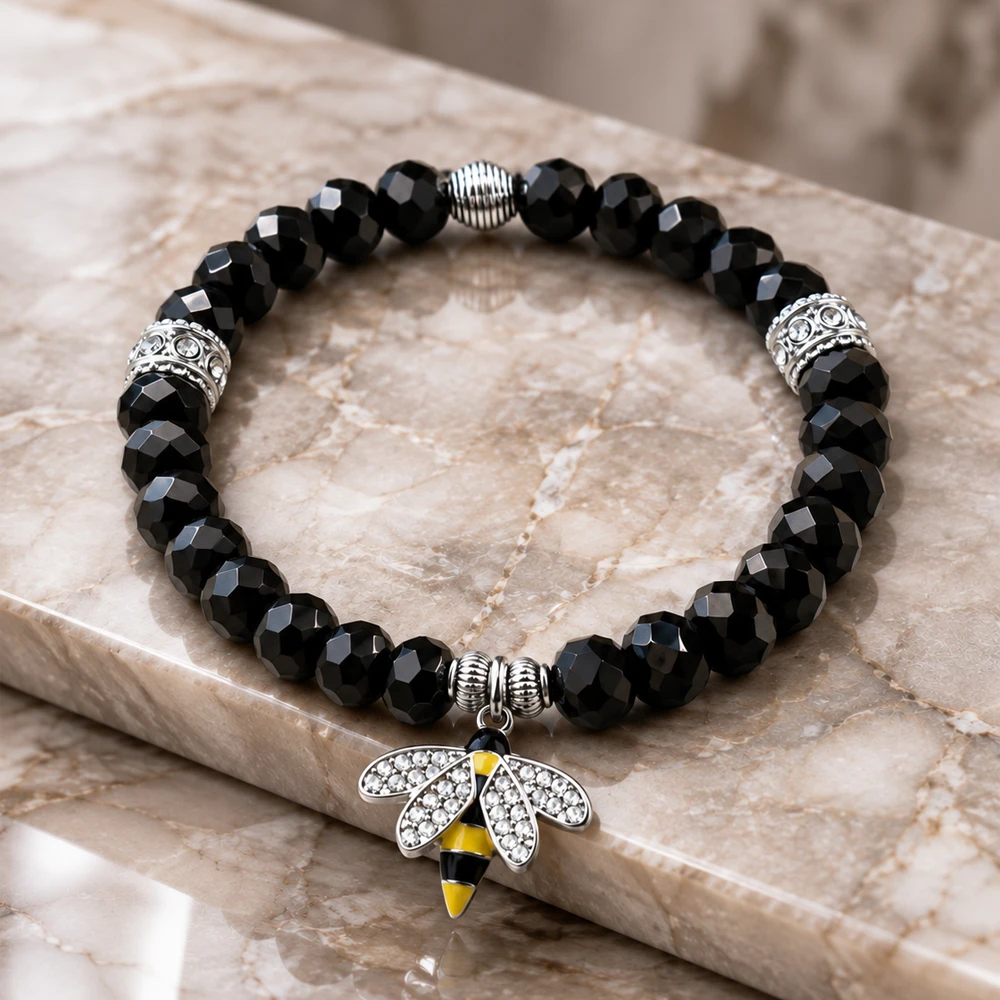
Marble detail
A closer angled composition with stone reflections and shallow focus.
What matters in production
Consistency is a quality check, not a prompt adjective.
The workflow
A repeatable framework, not a one-off prompt.
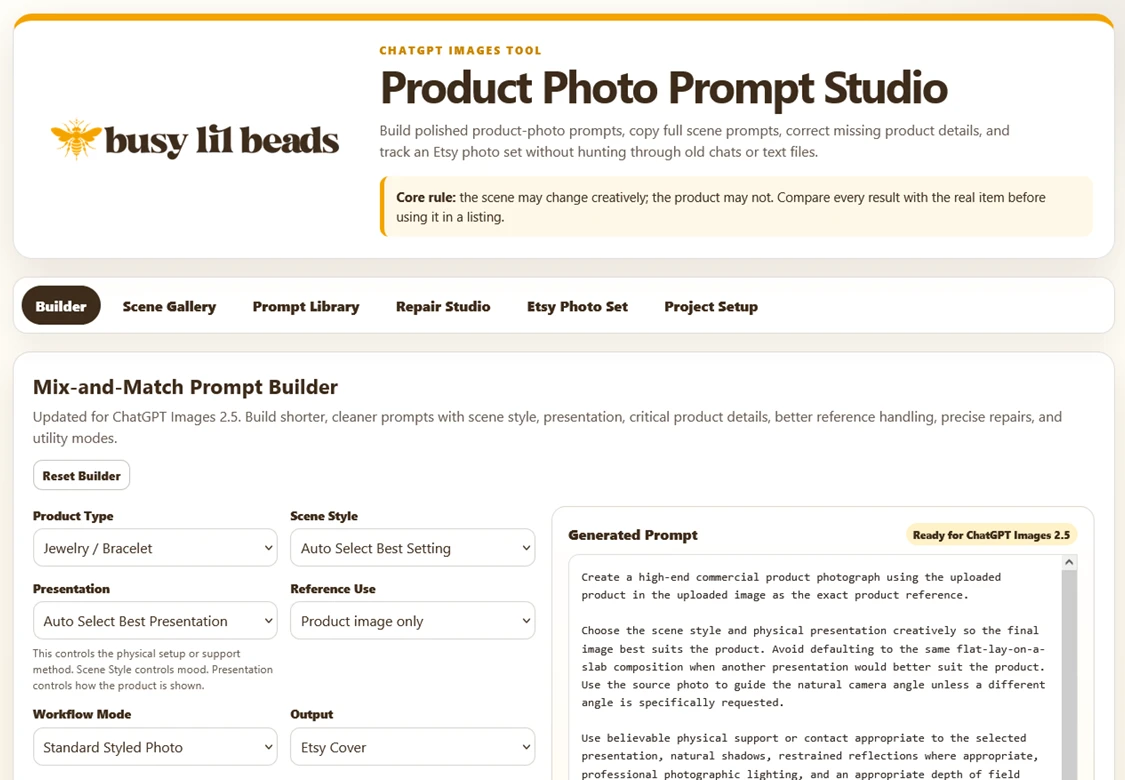
I built Product Photo Prompt Studio, a browser-based prompt builder for planning product scenes and recording product details. It includes scene presets, targeted repair prompts, and a product-accuracy checklist.
- Define what must stay accurate.Record the actual product's materials, bead arrangement, hardware, and charm details.
- Direct the creative treatment.Specify scene style, presentation, references, lighting, and final aspect ratio.
- Review and refine.Check fidelity, choose strong results, and use targeted corrections or Photoshop when needed.
Takeaway
Product accuracy drives the creative decisions.
These experiments show a practical way to create multiple commercial looks from one reference product. They also show why final-image inspection is essential: visual appeal alone doesn't guarantee exact product fidelity.